Farewell Speckled Face
March 25th, 2025
It was a dismal day for Speckled Face.
The past week two of the nine female ducks (hens) had started to keep away from the main group, and it seemed mostly due to the raucous behavior of the males (drakes). Michael and I had witnessed the harassment only a couple days prior, as a hen was bitten from the back of the neck by one of the drakes. Our WWOOF hostess (we’ll call her “Maria”) commented that roosters will sometimes tear open the back of a hen when mating.
The truth about most males on a farm is that they are castrated and culled and females are the prized sex. The flock only needed one male. “We’ll process him tomorrow,” Maria told us. She’d processed forty chickens the year before, but not very many ducks.
Michael and I tended to humanize the animals much more than our host family, saying that the drake was “giving his last words” to his flock the night before his death. Maria saw taking an animal’s life as our right from God for dominion. We give the animals a good life (albeit short, but much happier than on a factory farm), and in turn their death supports life for us.
Typically our WWOOF family would want to kill several to make it worth their time, since the preparation was tedious. There was a large pot of water to boil, ice water for another bowl, a table to be placed outside with a hose for cleanup, the killing cone to be mounted, and the different slaughtering tools assembled. However, the death of this drake was necessary to solve the imbalance of the flock; plus, we would get to watch a fowl be processed from beginning to end.
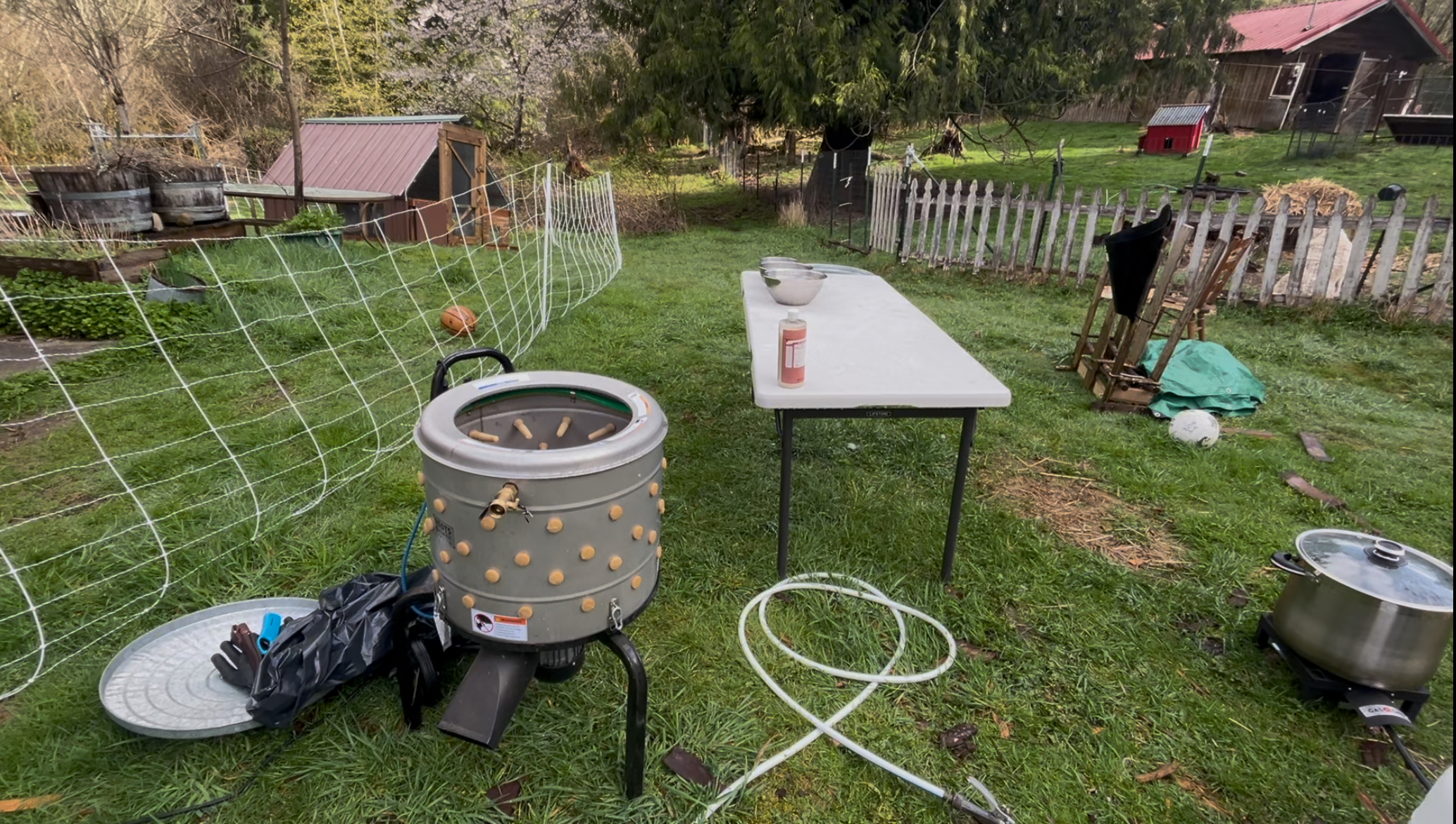
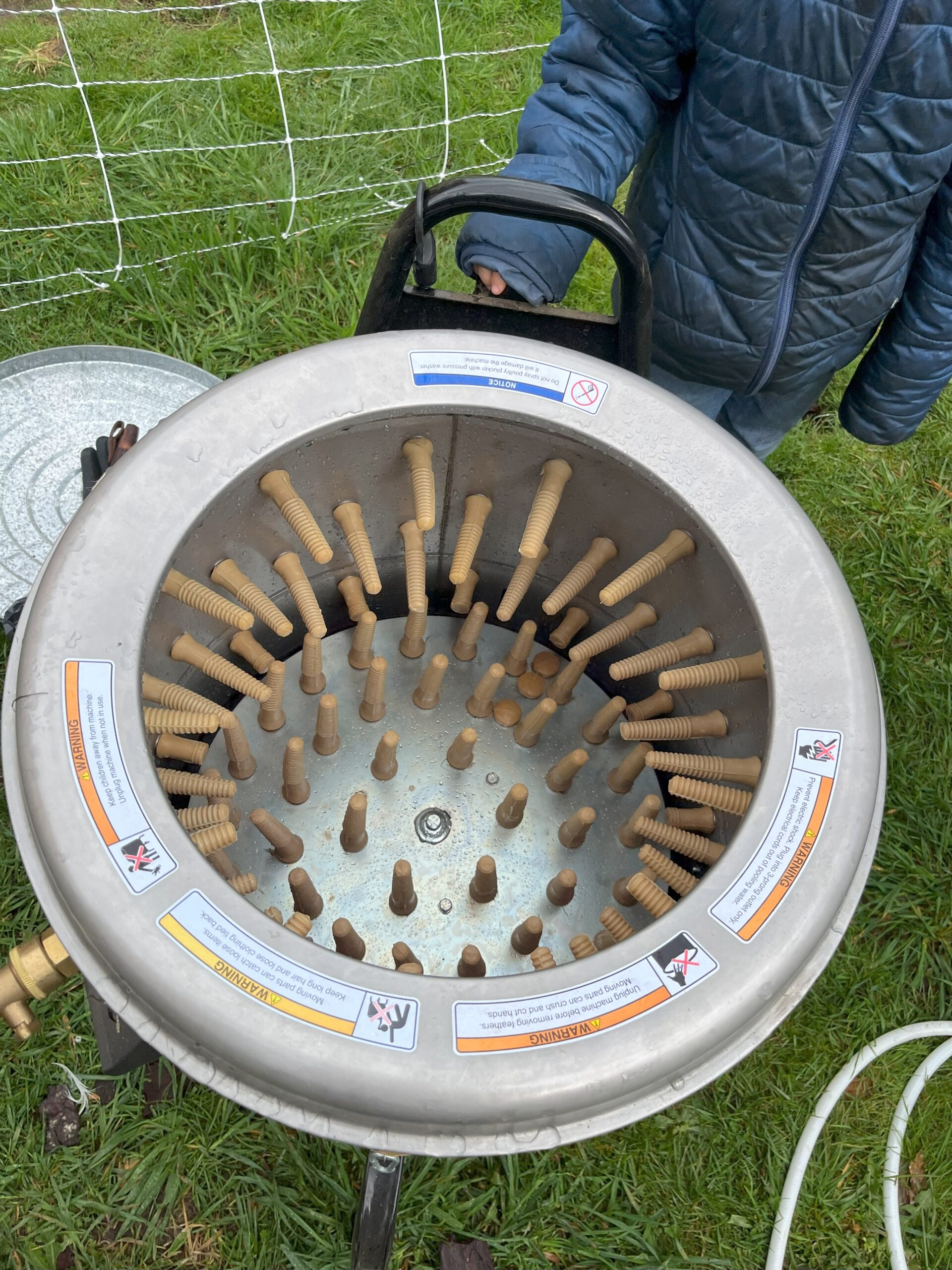
DeFeather-r
Killing Cone
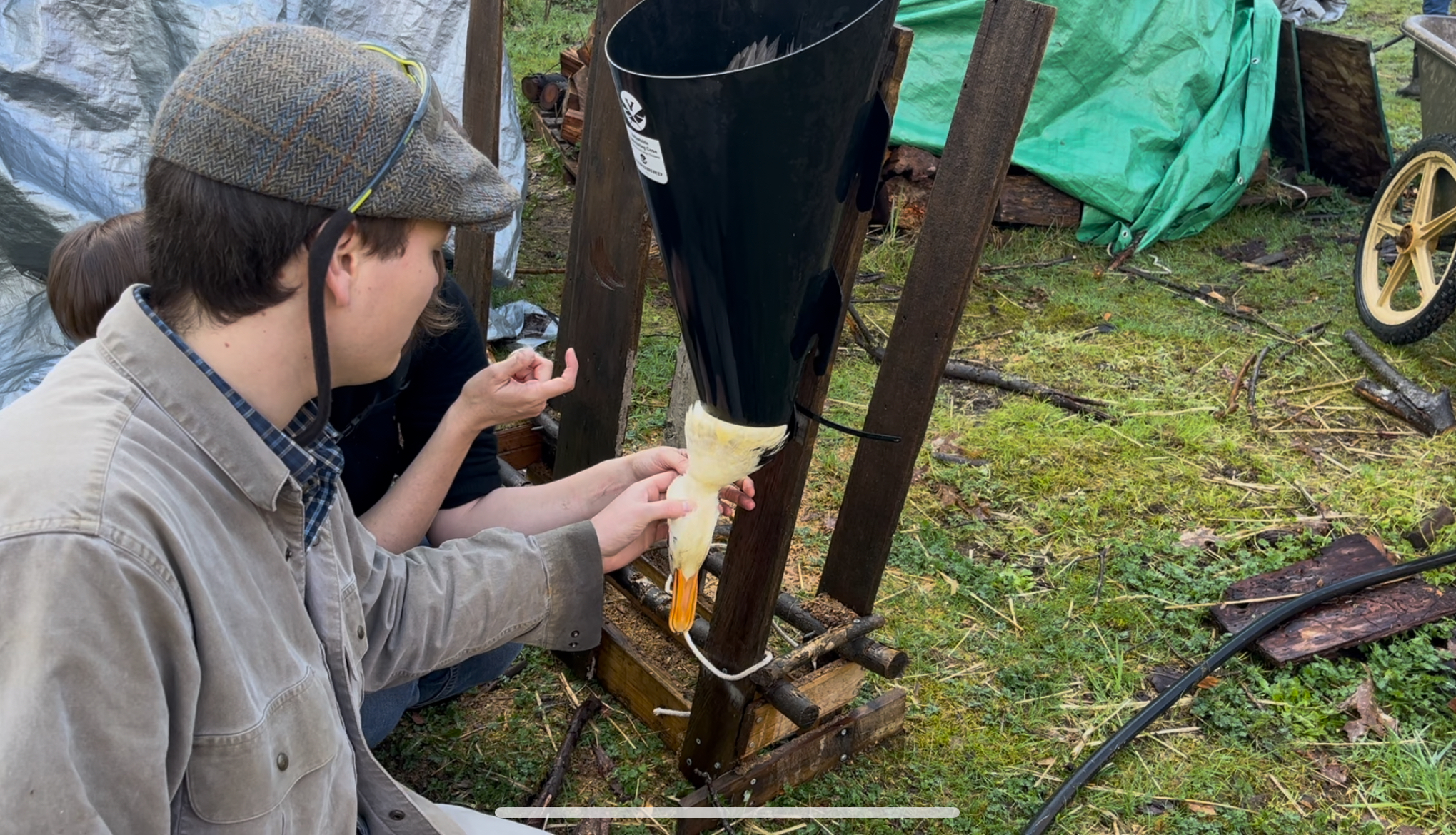
Michael and Maria’s son, Seth, caught the black and white offender, and brought him to the table, Michael singing “Amazing Grace” on the way. Speckled Face made one last desperate attempt at escape (again, me humanizing a duck), as he slipped out of Seth’s hands. Michael cornered the drake, and he was placed into a black funnel dubbed “The Killing Cone”.
“More experienced people can do this without it, but it’s the most humane to use one if you’re not,” Maria explained while situating our victim.
I handed her a small knife as she knelt by the duck’s head, visible from the bottom end of the Killing Cone. Maria decided on the best angle to slice the jugular vein after palpating for his jaw bone. She located the bone and had me feel it. The cut would be made just superior to the bone and in a diagonal line, with the intended goal of cutting the jugular, not the wind pipe, “or else [he’ll] make a gasping sound and die of affixation,” Maria explained.
Maria made a confident motion with the knife, and the cut was made.
Red is such a bold color. It has endless associations – love, hate, anger, hunger… death. There I stood, watching the death of a simple duck, as its life blood spilled out. The creature’s head swung back and forth, then hung limp. Red stained the wood beneath the Killing Cone.
With all the chicken, beef, and pork my husband and I have eaten, neither of us have ever seen an animal die before. It was a sobering moment, to watch the duck become lifeless before our eyes. Maria wasted no time in dunking the body into the scalding water, then begin de-feathering. Mabel squirmed in the baby carrier, but I was determined to see the whole process through.
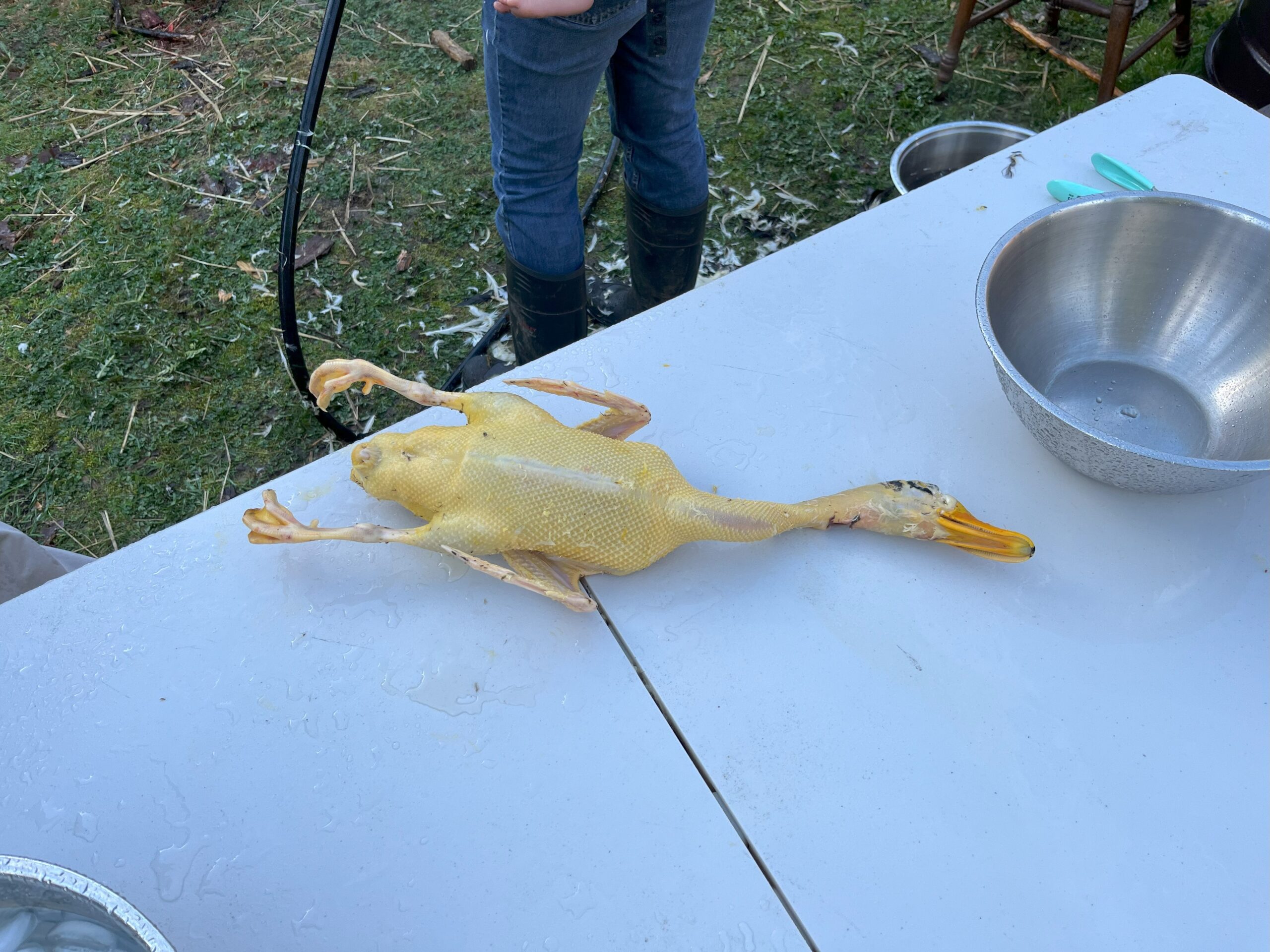
After most of the feathers were removed, Maria skinned the feet and claws were removed. Michael made a face as the head was partly sliced and partly twisted off. It would be given to the dog, along with a few of the undesirable organs. An oil gland was removed with a skinny knife near the tail. Mariah pulled out the crop (“harder to find than a chicken’s,” she’d confessed) and located the windpipe as well as the duck’s “quacker” near the base of the neck. Then another cut was made near the tail, and the intestines were taken out.
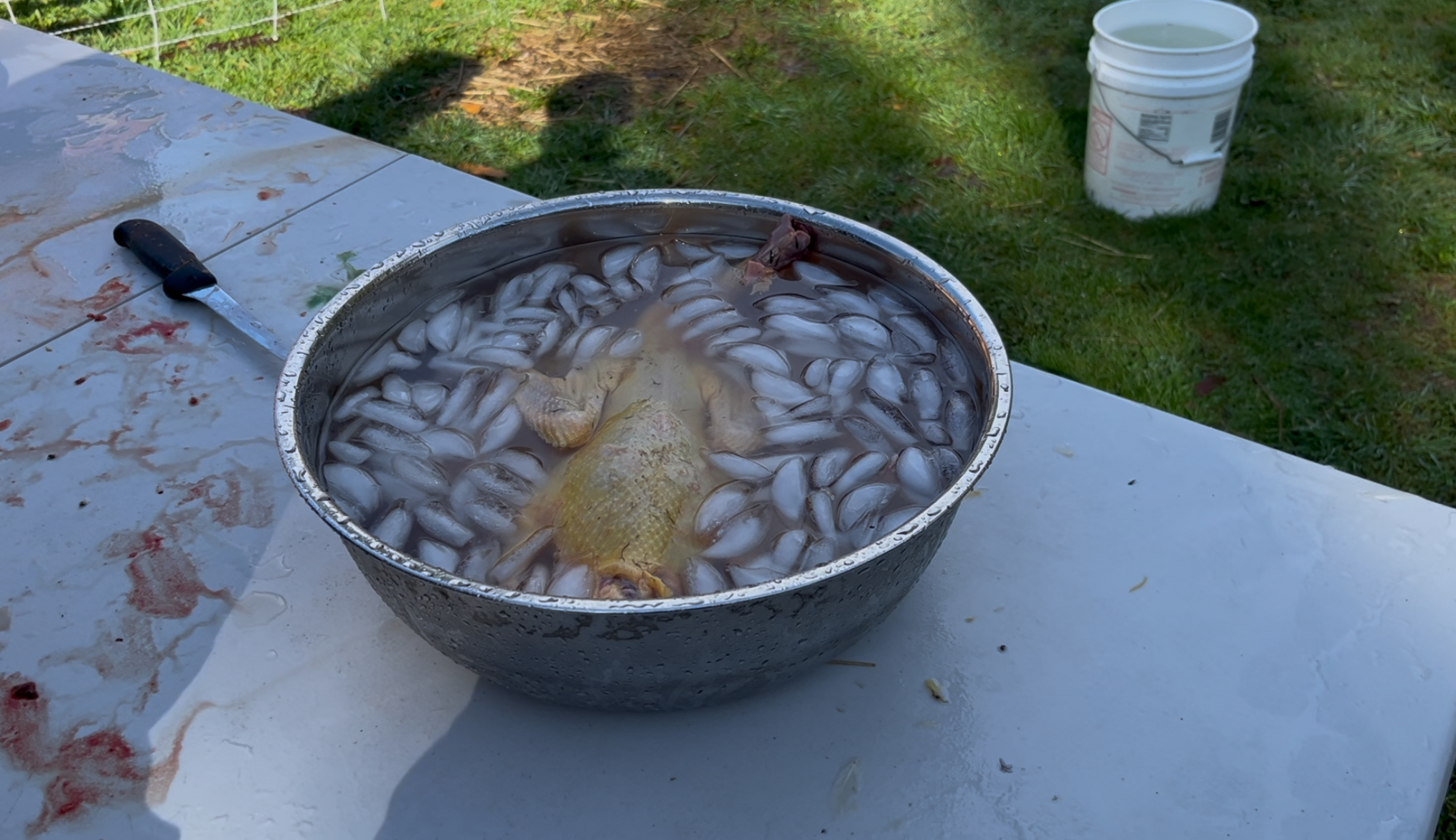
The processing became an anatomy lesson as each organ was scooped out and placed in the ice water bowl, saving the liver and heart for us to eat later. A dark green bile seeped out of the gall bladder, and small black pebbles were lodged in the yellow strands of the gizzard. Once the duck was hollowed out and placed in the ice water, the processing had come to an end. Maria would put the whole duck in an airtight bag and then the freezer that afternoon.
Our North American culture is removed from so many experiences, especially two of the most important, birth and death. There are so many people and animals that “die” on a TV screen or in book pages, but when was the last time we saw something really die? We eat and eat and eat, and don’t even consider the cost of the life given.
The death of a simple duck had me considering our recent readings of Leviticus, and so many other Bible passages. Blood on a door frame, blood poured out on the ground like water, the bloody hands of the priests, and the blood on the cross. Innocent blood was required for our redemption. Death for life.
Speckled Face lived a full life. He hunted bugs, soaked in the rain, basked in the sun, and watched over his little harem of hens. “Death is terrible,” I found myself thinking, hours after the event.
“It is. But he would have lived a far more terrible life, and died a more terrible death in other places,” Michael explained.
I know he’s right… but it doesn’t make it any less terrible. I do understand though. We give them a good life, and they allow us to live with their sacrifice. That is our duty as good stewards.